




ABOUT
Retaining Wall Waterproofing
| Property | Description |
|---|---|
| Product Type | Flexible Cementitious / Bituminous / PU Waterproofing System |
| Base Material | Acrylic polymer, cement, or modified bitumen |
| Application Method | Brush, roller, or spray applied in multiple coats |
| Recommended Areas | Retaining walls, basements, foundation walls, and underground structures |
| Surface Preparation | Clean, sound, and free from loose materials or efflorescence |
| Coating Thickness | 1.5–2 mm (in two or more coats) |
| Waterproofing Property | Excellent resistance to hydrostatic pressure and water seepage |
| Crack Bridging Ability | Up to 2 mm |
| UV Resistance | Good (requires protection if exposed to sunlight) |
| Compatibility | Can be used with protective boards or plaster finishes |
| Temperature Resistance | -20°C to +80°C |
| Coverage | 1.2–1.5 m² per kg (two coats) |
| Shelf Life | 12 months in unopened condition |
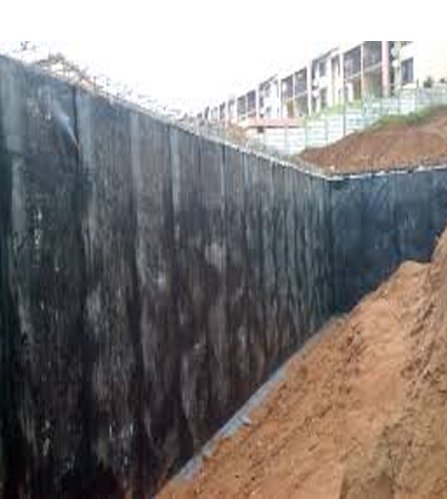
Retaining Wall Waterproofing is a protective system designed to prevent water infiltration, dampness, and structural damage in retaining walls exposed to soil moisture and hydrostatic pressure. This waterproofing solution creates a continuous, flexible barrier that resists cracks and seepage while enhancing the durability of concrete or masonry walls. It is ideal for basements, garden retaining walls, and underground structures where long-term protection from water ingress and efflorescence is critical for maintaining structural integrity and aesthetics.